
(Enroll for just $197, or Included With Your All Access Pass)

Many people assume claiming Social Security is a simple decision, but the reality is far more complicated. In this module, we’ll look at why it is so important to understand your options, how the system’s rules have made timing harder than it appears, and why claiming without carefully weighing your choices can lead to missed opportunities over time.
We’ll also walk through a practical process for evaluating the three main claiming windows: early, at full retirement age, or later. This module is designed to help you slow down, think more clearly about your options, and make a Social Security decision that fits more thoughtfully into your overall retirement plan.

Most people are asked to make Social Security decisions before they fully understand how the system works. In this module, we’ll build that foundation by looking at why Social Security was created, how its role has changed over time, and why that history still shapes the claiming choices people face today.
You’ll learn the core terms that drive benefit decisions, see how your work history and earnings record affect what you may receive, and understand the practical steps involved in reviewing your earnings record and applying for benefits.
Just as important, this module is designed to make the rest of the course easier to follow and help you approach future decisions with more clarity and less confidence.

Most people see a Social Security estimate, but few understand what is actually driving that number. In this module, we’ll break down the core calculations and variables that impact your benefit amount, including your primary insurance amount, your full retirement age, and the projections shown on your Social Security statement.
You’ll also learn how your highest 35 years of earnings affect your baseline benefit, why working longer can still improve the amount you received in some cases, and why full retirement age matters even if you don’t plan to claim then.
Finally, we’ll also look at how to read your statement more carefully, so you can spot errors, understand the assumptions behind the projections, and use these projections more thoughtfully in your planning.

One of the biggest Social Security decisions is whether to claim early for income now or wait for a larger future benefit. In this module, we’ll look at the real tradeoffs on both sides, including how claiming early reduces your monthly benefit, how delaying increases it, and why neither option is right in every situation.
You’ll learn how factors like health, longevity, earned income, available assets, and family goals can all change what the right answer looks like. We’ll also break down how a break-even analysis works, while also showing why the math alone is not enough to make the best claiming decision. This module will help you evaluate timing more carefully and make a decision that fits your broader retirement plan, not just which option provides the highest benefit.

Social Security decisions become more complex when they affect more than one person. In this module, we’ll look at how spousal benefits work under current rules, why married couples often make better decisions when they coordinate their timing, and how claiming choices affect both current household income and future survivor benefits.
You’ll also learn when benefits may extend to children or other dependents, and how those rules can create opportunities many families overlook. Just as important, we’ll cover the limits and restrictions that shape these decisions, including deemed filing and family maximum rules. This module will help you think about Social Security not as an individual decision, but as a set of connected choices that can affect the financial strength of the whole household.

Social Security rules become especially important when life does not follow a predictable path. In this module, we’ll look at how benefits are impacted by divorce, the passing of a spouse, and in the event of remarriage, where the rules often feel unfamiliar and the stakes can be high.
You’ll learn how an ex-spouse’s record may still provide benefits, the impact of survivor decisions on long-term household income, and how remarriage can change eligibility in ways many people do not expect. We’ll also cover the key thresholds and timing rules that shape these outcomes, including the 10-year marriage requirement and the importance of age 60 in many survivor situations. This module will help you understand these rules more clearly, avoid preventable mistakes, and make decisions that better protect your financial stability over time.

For many people, retirement doesn’t always mean quitting work altogether, but continuing even on a small part time basis, and that often complicates Social Security decisions. In this module, we’ll discuss how continuing to earn even part time income can affect your benefits, especially if you claim before your full retirement age and earn more than the allowed limits.
You’ll also learn when working longer can make sense to strengthen your retirement plan by increasing savings, improving future benefits, and giving you more flexibility around when to claim.
We’ll also explore the added considerations business owners and self-employed individuals need to watch closely, and where income reporting and long-term tradeoffs can have a meaningful impact on benefits.

Claiming Social Security without factoring in the rest of your income plan often creates avoidable tax problems, missed opportunities, and having to make tradeoffs later in retirement. In this module, we’ll explore how Social Security interacts with your other income sources, why taxes often vary so widely from one household to another, and how claiming decisions affect both spouses over time.
You’ll learn why timing withdrawals, required minimum distributions, survivor planning, and opportunity cost all matter when considering when to file. We’ll also discuss why general assumptions and other people’s decisions are often poor guides when your own income sources, priorities, and behaviors are what drive the real outcome. This module will help you think about Social Security not as a stand-alone decision, but as one part of a broader retirement income and tax strategy.

Social Security planning works best when it takes into account both the current rules and your unique circumstances. In this module, we’ll look at why Social Security thresholds, adjustments, and policy details change over time, and why staying current matters if you want to maximize your benefits.
You’ll also learn how to identify the rules that apply to your circumstances, and how to compare various claiming scenarios before making a final decision. Just as important, we’ll also walk through how to turn that analysis into a practical plan you can rely on. This module will help you move from general knowledge about Social Security to a strategy that is more personalized, current, and thoughtfully developed around your needs and objectives.
By the time people get close to claiming Social Security, the biggest challenge is often not a lack of information, but knowing how to apply it to their unique situation. In this module, we’ll work through some of the most common Social Security questions people ask, including whether taking benefits early at 62 makes sense, or if it’s better to wait until 70. What happens after a spouse dies? What if Social Security “runs out”?
We’ll also discuss one of the most common areas of confusion—how Social Security income is taxed—so you can better understand what to expect before your benefits begin. This module will help you think through these decisions more clearly, avoid fear-based conclusions, and apply what you’ve learned throughout the course.

In addition to the video lessons, you’ll also receive a comprehensive Course Companion Workbook — designed to help you move from passive learning to active implementation. This workbook is a structured guide that walks you through exercises, prompts for reflection, and practical worksheets aligned with each lesson — helping you organize financial information, clarify your priorities, and document key decisions as you go.
By the end of the course, you won’t just have new knowledge — you’ll have written answers, organized information, and a clearer picture and personal roadmap. The workbook becomes a working document you can revisit, refine, and share with your spouse, family or advisor — turning insight into something actionable.
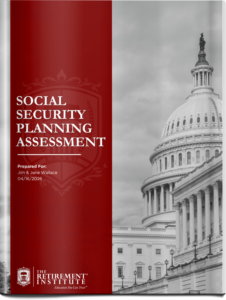
Your Social Security Optimization Assessment will reveal how you score in each of the critical areas of claiming strategy — including timing, spousal benefits, taxation, earnings penalties, and more. It will also provide you with recommended next action steps to help you improve your scores where needed and build a strategy that maximizes your lifetime benefits.
The assessment covers straightforward questions about your claiming timeline, marital status, income sources, integration with your overall retirement plan, and more. No financial jargon, no trick questions — just an honest look at where you stand today.


Included when you enroll is access to our 24/7 on-demand support team— so your questions don’t have to wait. Retirement planning often raises thoughts or questions as you progress through each lesson. Questions like,
“How does this apply to me?”
“What if my situation is slightly different?”
Instead of letting uncertainty linger, you can ask for clarification in the moment. Whether you need help understanding a concept, thinking through a scenario, or navigating next steps, support is always available when you need it. The goal isn’t to replace personalized planning — it’s to ensure you’re never left with unanswered questions and that you feel supported along the way.
You may not remember the exact day — only the moment you realized, “this feels different now.”
Nothing is wrong.
But suddenly, “I’ll figure it out later” doesn’t feel like a plan anymore.
It might be an unexpected drop in the market that suddenly has you watching the news more closely.
A birthday approaching — and the question you can no longer ignore: Should I take Social Security now, or wait?
Or a comment from your spouse that lingers:
“Don’t worry. If something happens to me, it’s all taken care of.”
And suddenly, a new question replaces the old:
Am I really prepared for what’s ahead?
It’s that, for the first time, you realize you have less time to “figure it out later” than you did when you were raising your family and building a career.
Until now, there was always more time.
More time to save.
More time to plan.
More time to talk about it later.
In retirement, time works differently.
Paychecks are replaced by Social Security and investments.
Market declines affect not just statement balances, but spendable income.
And each decision begins to carry more weight than the last.
That shift — from accumulation to reliance — is often what you’re feeling.

Instead, it’s shaped by a number of smaller transitions and decisions that tend to arrive quietly — often during distraction, transition, or change in circumstances.
You don’t need to know when these moments will show up — only how your plan will handle it when they do.

A market decline in retirement feels different in retirement than it did when you were still working.
It’s no longer about recovery on paper.
It’s about income — and how long your money will last.
When income needs and market corrections overlap, income stability matters more than your annual return.

Before retirement, Social Security is often treated like a simple decision to “take it early, or wait till full retirement age“.
In reality, it’s one of the most consequential income decisions you’ll ever make.
A choice that will shape income for decades — and once the decision is made, it’s often difficult to reverse.

A divorce later in life doesn’t just divide spouses.
It divides assets.
It reshapes income, housing, and long-term security — often all at once.
Even plans that once felt solid can feel suddenly fragile and uncertain.
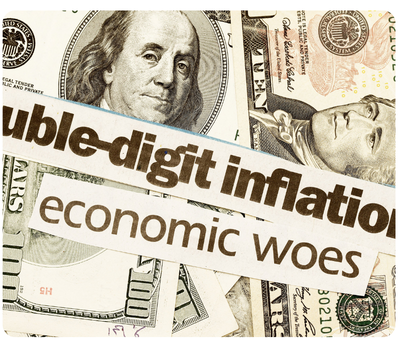
Inflation rarely threatens retirement security today.
Instead, it slowly eats away at your income and savings — year after year — steadily compounding your need to draw down your savings faster than you had planned.
Retirement plans designed primarily for investment safety can often be impacted significantly by years of rising inflation, even when nothing appears “wrong.”

All women dread the day when they become the sole financial decision-maker. But statistically, 80% of women will become widowed at some point during retirement.
And when that happens, confidence and assurance matters more than numbers and spreadsheets.
The goal isn’t to solve for every one of these risks today.
The goal is to gain confidence and understanding.
Because with understanding comes clarity — and when things are clear, fear and uncertainty begin to fade.
This course exists to help you understand how retirement actually works, and the decisions and life events you’ll need to navigate — before those events become present day reality.
It’s designed to give you context first.
Clarity before action.
And confidence rooted in understanding.
Women in Retirement is a self-paced, on-demand course created specifically to help women navigate this transition thoughtfully — often while still juggling the day to day of work, family, and the other responsibilities you carry.
It’s designed for you to move through it at your own pace.
Pause when you need to.
And then pick it back up when life allows.
Because you don’t need more pressure.
You need support and clarity.
As women, we need education and clarity in order to gain understanding and confidence.
So the course doesn’t begin with numbers, charts, or spreadsheets.
It begins by providing context — helping you understand how retirement actually works, and why certain decisions carry more weight than others.
Each lesson is intentionally short and focused.
You’re not expected to “keep up.”
You’re not asked to make decisions as you go.
Instead, you’re guided through these topics the way they unfolds in real life — income first, then risk management, followed by longevity, healthcare, and life transitions.
It’s about giving you the confidence to trust yourself when the time to make these decisions arrives.
Inside Women in Retirement, you’ll explore the areas of planning that most often create the most uncertainty — income, risk, longevity, healthcare, and life transitions — explained clearly and without financial jargon.
You’ll learn how retirement income actually works, and how decisions like Social Security timing shape your future income needs.
You’ll also learn how markets and inflation affect your long-term planning, and why planning now for unexpected changes later leads to greater peace of mind.
You’ll also spend time clarifying what matters most to you — so decisions feel grounded and in alignment with your values, rather than simply a decision you made because someone told you what they thought was best.
The goal isn’t to cover everything.
It’s to help you understand deeply what matters most.
To help reinforce what you’ll learn in each lesson, Women in Retirement also includes a companion course workbook which mirrors the course lesson by lesson, giving you space to slow down, reflect, and connect what you’re learning to your own life and planning.
In it, you’ll also find guided questions, simple exercises, and visual examples that help you; clarify your income needs, identify real risks, and prepare for conversations — without turning learning into another overwhelming task.
Some women use the workbook to follow along as they watch.
Others return to it later, when questions surface.
There’s no right way to use it — only what feels supportive to you.
And You Don’t Have to Do It Alone!
As you move through the course, you’ll also have access to support thorough our on-demand chat, available to you 24/7.
That way, when a question comes up — either while you’re watching a lesson, reading through the workbook, or thinking something through later — you don’t have to spend hours Googling possible answers.
You just ask.
Get added clarity.
And needed reassurance — in real time.
This work isn’t meant to be rushed — or done alone.
Women in Retirement is offered for a simple one-time enrollment fee.
Your enrollment includes lifetime access to the complete course, so you can move through it at your own pace. Your enrollment also includes the course companion workbook, and access to our on-demand chat support, available inside the course 24/7 anytime you need it.

You’ll have lifetime access, so you can take your time, return to the course whenever questions — or life — changes.
This is an investment in understanding and long term peace of mind.
You don’t need to know today whether or not this program is right for you.
We want you to feel supported — not pressured.
That’s why you’re invited to enroll today and take your time exploring the course and companion workbook.
Watch the lessons.
Skim the materials.
Notice whether it feels clear, supportive, and relevant to you.
If, within 30 days, you decide this course isn’t what you expected, you can simply request a full refund.
No explanations required.
No questions asked.
This guarantee exists so you can begin with confidence — knowing you’re free to explore the course, without pressure or risk.
At some point, retirement stops being about numbers and spreadsheets — and starts being about how confident you feel navigating what’s ahead.
Taking the time to gain clarity now is a gift you give yourself — one that will last throughout retirement.
Women in Retirement exists to give you that clarity — so you can face what’s ahead with confidence.
Begin with clarity — and move forward at your own pace.


“I’ve managed our household finances for most of our marriage, but I never felt confident about long-term financial decisions, especially when it came to investing. This course gave me the clarity I needed to feel capable — not overwhelmed.”
“As a widow, I’ve often felt like I was catching up on decisions I didn’t fully understand before. This course helped me slow down, learn at my own pace, and regain a sense of control. I finished the course feeling more confident instead of anxious.”
“Love the course workbook. Really helpful exercises that walked me through clarifying what I actually want retirement to look like — not just what I think it’s supposed to look like. I still refer back to it when I need a refresher.”
“I didn’t realize how differently retirement planning affects women until I took this course. I’ve attended a few dinner seminars in the past, but none that addressed women’s issues like longevity, income gaps, or the possibility of outliving a spouse the way this course did. It helped me see the landscape clearly — and plan for it thoughtfully.”
“This course really opened my eyes to the longevity issue we face as women. Arwen walked through this calmly and practically. It didn’t feel overwhelming — it felt manageable. And now I know I need to re-evalute my previous plans to ensure they will last to my full life expectancy”
“For the first time, I feel like I can participate confidently in conversations about our retirement plans. I’m no longer just sitting quietly hoping everything works out. I now better understand the moving pieces, and that understanding brings real peace of mind.”
“I thought I had a good handle on retirement. What I hadn’t considered were the healthcare and long-term care realities women face. The way Arwen explained it though didn’t create fear — it just helped me know how to think about it and plan for it.”
“What I really appreciated about the instructor was her tone. She didn’t assume I should already know everything, and she didn’t talk down to me either. She simply explained the decisions ahead in a way that made sense to me. Probably helped that she was a woman too!”
“The chat support team was a pleasant surprise. Anytime I had a question, I received really thoughtful responses — not like most chat services I’ve used. I probably kept Grace talking longer than she was supposed to, but I appreciate the time she spent with me.”
Beau Henderson has spent his career fixing what he calls “the disconnect.” When he looked at the data, he found that 96% of households fail to claim their Social Security at the optimal time — meaning only 4% get one of the biggest financial decisions of their lives right. Yet whenever he asks an audience how many want every dollar they’re entitled to, the answer is always 100%. That gap between what people want and what actually happens became the focus of his work.
A Retirement Income Certified Professional® and National Social Security Advisor, Beau was named the National Social Security Advisor of the Year and has taught this material to audiences more than 200 times. With a background in psychology and nearly a quarter century of experience, he founded RichLife Advisors on a people-first philosophy and has helped transform the finances of thousands of households. His work has been featured in The Wall Street Journal, CNBC, Reuters, and Forbes, and he’s a USA Today and Wall Street Journal best-selling author.
His passion for this work is personal: after losing his father young and helping his mother navigate the financial decisions that followed, he saw firsthand how much clarity matters at exactly the moment families feel most lost.

Reach out to us at support@theretirementinstitute.com
Yes — this course was created for anyone approaching retirement, or already in it, who wants to make sure they claim Social Security in the way that gives them the most over their lifetime. For most households it’s the single largest source of retirement income, and if you want to get that decision right rather than guess, this was built for you.
No — and this surprises almost everyone. The Social Security Administration is a fine resource for filing forms and answering basic questions, but its representatives are not trained or permitted to tell you the optimal strategy for your household. People are routinely given incomplete or even incorrect guidance. With more than 500 possible ways to claim, this course shows you how to make an informed decision rather than relying on whoever happens to answer the phone.
Absolutely. This course doesn’t replace your advisor — it makes you a far better-informed client.
The reality is that most advisors still don’t walk clients through a true Social Security optimization process, even though it’s one of the biggest income decisions of retirement.
You’ll understand the levers that matter — timing, spousal and survivor benefits, taxation — so you can make sure this decision gets the attention it deserves.
There’s a right answer for YOU — but it isn’t the same for everyone.
Claiming early, claiming late, and everything in between each carries real trade-offs involving your life expectancy, your spouse, your other income, and taxes. This course walks through those exact scenarios — including the common “take it at 62 in case it’s not there later” concern — so you can see clearly which choice fits your situation instead of following a rule of thumb.There’s a right answer for YOU — but it isn’t the same for everyone. Claiming early, claiming late, and everything in between each carries real trade-offs involving your life expectancy, your spouse, your other income, and taxes. This course walks through those exact scenarios — including the common “take it at 62 in case it’s not there later” concern — so you can see clearly which choice fits your situation instead of following a rule of thumb.
Not at all. Beau has taught this material to live audiences hundreds of times, and the entire approach is built to turn a genuinely complicated government system into plain, understandable language. Lessons are short, self-paced, and take it one step at a time.
If you can follow a conversation, you can follow this course.
Not to worry. We offer a 30-day, 100% money-back guarantee on all of our courses. Enroll today, watch the lessons, work through the material, and if at any point you decide it isn’t what you expected, simply email our support team and we’ll refund 100% of your enrollment fee. No questions asked.