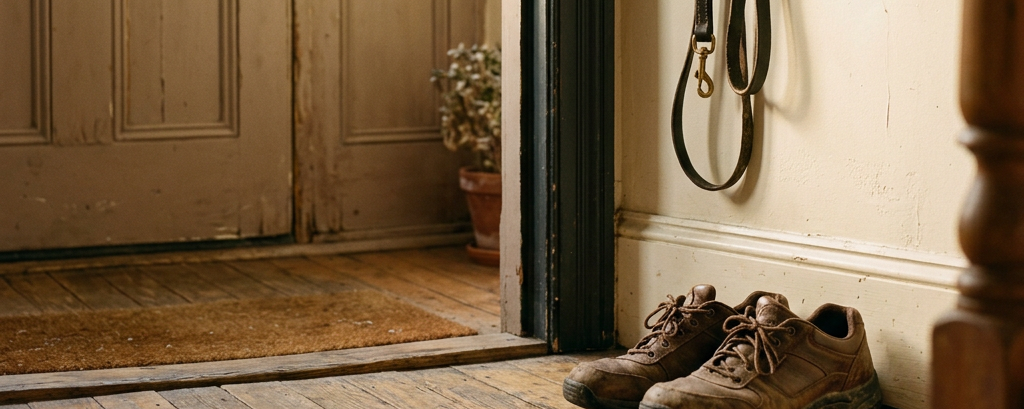
The leash hung by the door for four months after the dog died, because taking it down felt like a decision nobody in the house was ready to make. Every morning it was just there, a small daily reminder that the walk that used to start the day no longer needed to happen, and every morning it stayed exactly where it was, because moving it felt like agreeing that the absence was permanent. Eventually someone moved it. Nobody remembers deciding to. It just, one day, felt like it was time.
Dogs occupy a specific place in grief that’s worth naming directly: for many people, a dog is the only living being who was present, consistently and without complication, for years of ordinary daily life — every morning walk, every quiet evening, every hard week. Losing that presence is losing a genuine daily companion, and the grief that follows deserves to be taken exactly as seriously as it feels.
The Grief Often Ambushes You in the Routine, Not the Big Moments
Unlike some kinds of grief that peak around obvious milestones, dog grief tends to arrive hardest in small, routine moments — the leash by the door, the specific time of day the walk used to happen, the sound of a door that used to bring an eager response and now doesn’t. These small ambushes can feel disproportionate to the moment that triggers them, but they’re not disproportionate at all — they’re simply grief responding to the absence of a very specific, very consistent daily presence, in exactly the places that presence used to live.
Guilt Often Rides Alongside the Grief
A particular kind of guilt frequently accompanies losing a dog, especially when a decision about end-of-life care was involved — wondering if you waited too long, or not long enough, or made the right choice at all. This guilt is extremely common and rarely reflects an actual mistake; it more often reflects the impossible weight of having been asked to make a decision on behalf of a being who couldn’t make it for himself. That weight deserves compassion, not the harsh self-judgment it often produces.
The Rest of the House Grieves Too, Differently
If there are other pets in the household, or children who loved the dog, it’s worth remembering that grief moves through a household unevenly — other pets sometimes visibly search for a missing companion, and children may grieve in bursts that look nothing like adult grief, popping up unexpectedly weeks later. None of these different expressions are wrong. They’re just different shapes the same loss takes as it moves through different members of a household.
Support Exists Specifically for This
Dog-specific and general pet loss support groups, hotlines run by veterinary schools, and online communities built around this exact kind of grief all exist because losing a dog is a common and legitimate loss that deserves its own space — not a smaller version of human grief support, but its own recognized category, staffed and populated by people who understand without requiring an explanation of why a dog’s absence could possibly hurt this much.
The leash eventually came down and found a new home in a drawer, then eventually in a box with a collar and a favorite worn tennis ball. Nobody in that house needed the leash gone to prove they’d moved on. They just, eventually, didn’t need to see it every morning to remember what it had meant.