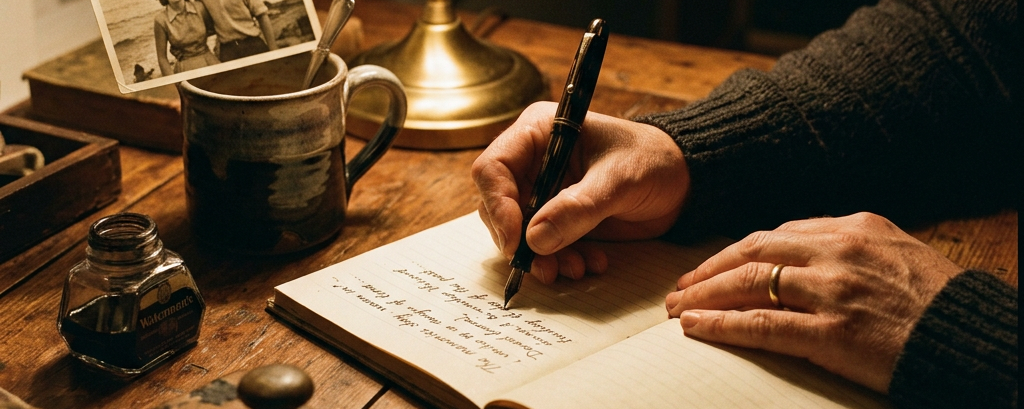
The funeral home needs it by tomorrow morning. That’s usually how it starts — not with inspiration, but with a deadline, handed to someone who is, at that exact moment, in no condition to write anything. You’re staring at a blank page with a cursor blinking in it, and somewhere in a folder labeled “arrangements” is a form that says something like “250–500 words,” as if grief comes with a word count you can plan around.
If you’re here because you need to write one — today, this week, for someone you loved — here’s what this piece will actually do for you: it’ll give you a structure that doesn’t feel like a form to fill out, a few phrases worth retiring, and permission for the thing nobody tells you outright, which is that there’s no version of this you can get wrong badly enough to have failed them.
The Obituary Isn’t a Résumé
The most common mistake isn’t a lack of effort — it’s drifting into a chronological list of degrees, job titles, and memberships, because that’s the safest, most fact-based option available to someone who can barely form sentences right now. A résumé documents what someone did. An obituary should capture who they were, and it usually does that better through two or three specific details than through an exhaustive list of accomplishments.
Think of it less like a filing cabinet and more like a photograph. You’re not archiving every frame that exists of this person — you’re choosing which single frame to keep.
The Backbone Every Obituary Actually Needs
1. Name — and how they were actually known. Not just the legal name, but whether people called them Bill, or Coach, or Nana.
2. Dates and place, stated briefly, without needing to be the centerpiece.
3. Survived by, and preceded by — the family structure, as complete or as simple as fits your family.
4. One or two specific stories or details that could only describe this person, not a category of person.
5. Service information, if there is a service, stated plainly at the end.
Five Phrases Worth Retiring
“Passed away peacefully, surrounded by loved ones” has been used so often it’s stopped meaning anything — even when it’s true, and it gets reached for just as often when it wasn’t peaceful at all, simply because it’s the phrase the template offers first.
“He loved nothing more than spending time with his family” could plausibly describe roughly forty percent of the obituaries printed in any given week, which means it probably doesn’t describe any one of them as specifically as the family intended.
“She never met a stranger,” “he lit up every room he entered,” and “she will be deeply missed by all who knew her” round out the set — not wrong, exactly, just so common they’ve become wallpaper. A reader’s eye slides right past them. A specific, true detail is the thing that actually stops someone scrolling.
One Detail Beats Ten Adjectives
Instead of writing “kind, generous, and loving,” describe the specific habit that made someone kind, generous, and loving in a way nobody else quite was: he always over-tipped, even when money was tight. She called every grandchild by a nickname only she used. He refused to throw away a broken appliance until he’d tried to fix it at least three times, on principle, whether or not it worked.
A concrete detail lets a total stranger understand who this person actually was. A string of adjectives only tells the reader that the writer approved of them — which is true of nearly every obituary ever written, and therefore tells the reader almost nothing at all.
What to Do When You Genuinely Can’t Write Right Now
Grief fog is real, and it makes stringing sentences together feel like translating from a language you used to know fluently. If that’s where you are right now: it’s fine to ask a family member with more bandwidth today to write a first draft you edit later. It’s fine to use a template as scaffolding rather than a finished product. It’s fine to write it in disconnected fragments and stitch them together once your head clears a little. A simple, true sentence will always serve the person better than an eloquent, generic one you forced out under pressure.
An obituary is, in a strange and unglamorous way, the last story you get to tell about someone — and like most last things, it rarely goes the way you pictured it. It won’t capture everything. It isn’t supposed to. Somewhere, a stranger scrolling through a newspaper’s website will read three sentences about someone they never met and, for just a moment, understand exactly why they mattered. That’s the whole job. Not perfect. Not complete. Just true, in the specific way only you could have written it.