
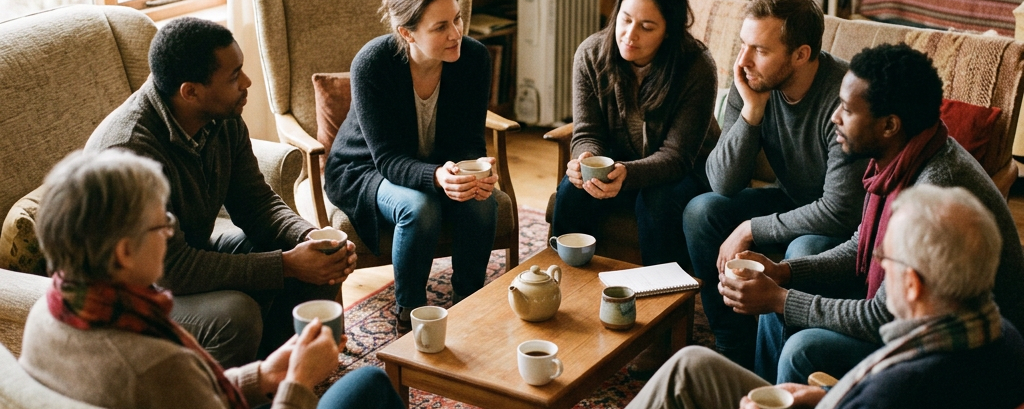
A man who’d been caring for his wife for six years finally walked into his first support group meeting because his daughter, frankly, made him. He sat in the back, said nothing for the first forty minutes, and left immediately after it ended. He came back the next week anyway. Three months later, he was the one other new members sat next to, because someone had told them he was good at explaining what the first meeting feels like without making it sound scarier than it is.
That reluctance at the start is almost universal, and worth naming honestly: most caregivers who eventually find these groups useful didn’t want to go the first time. The idea of sitting in a room describing your hardest moments to strangers can feel exposing, or like an admission that you’re not handling things well enough on your own. Neither of those fears tends to match what the room actually feels like once you’re in it.
Why This Kind of Support Works Differently Than a Friend’s Advice
Friends and family, however well-meaning, often haven’t lived what caregiving actually asks of a person day to day, and their advice, however kind, can land as slightly beside the point. A caregiver support group is made up entirely of people who don’t need the situation explained before they understand it — the exhaustion, the guilt, the strange grief of caring for someone who’s still alive but has changed. That shared context does something a well-intentioned outsider’s advice usually can’t: it makes you feel accompanied rather than merely helped.
Where to Actually Find One
Hospitals and hospice organizations frequently run caregiver support groups, often free, and a hospital social worker is usually a fast, knowledgeable first call if you’re not sure where to start. Local Area Agencies on Aging maintain lists of caregiver resources, including support groups specific to your area and situation. Condition-specific organizations — for Alzheimer’s, Parkinson’s, cancer caregiving, and others — often run groups tailored to the particular demands of caring for someone with that specific diagnosis, which can feel more precisely relevant than a general caregiving group. And for anyone not ready for in-person attendance, online caregiver communities offer a lower-barrier way to connect, at whatever hour the exhaustion actually hits.
You Don’t Have to Talk the First Time
Most groups don’t require participation to attend — sitting quietly and listening, the way the man in the back row did, is a completely legitimate way to start. Many caregivers describe the first several meetings as mostly absorbing, and describe that absorption as valuable on its own, well before they ever say a word themselves. There’s no required pace here. Showing up is the part that matters most, and it counts even on the weeks you don’t speak.
The man from the back row still attends most weeks, six years after his wife passed — not because he still needs the group the way he once did, but because he’s become, for someone else’s first frightened week, the person who makes the room feel a little less unfamiliar. That’s often how these groups keep working long after any individual caregiver’s hardest season has passed.