The memory table at her service had exactly one object that made people stop and actually cry: a chipped coffee mug, unwashed since her last use of it, that her son had brought without telling anyone in advance. It wasn’t beautiful. It wasn’t curated. It was, simply, hers — evidence of an ordinary Tuesday morning that would never happen again, sitting on a table otherwise full of carefully chosen, more presentable tributes. That mug did more emotional work than every framed photograph combined.
That’s the thing worth understanding before building any memory table: the goal isn’t a polished display. It’s an honest one.
Layer Different Kinds of Objects, Not Just Photos
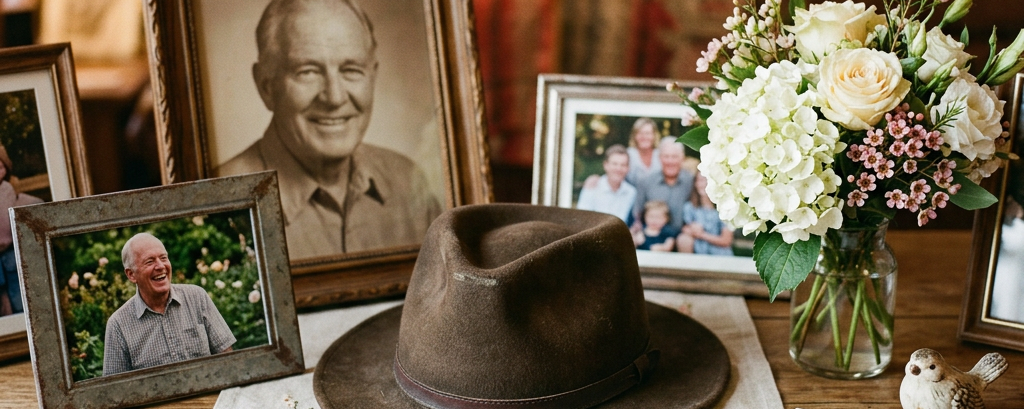
A memory table built entirely from framed photographs, while lovely, tends to feel one-dimensional — a visual summary rather than a genuine presence. A stronger table mixes photographs with a small number of actual objects the person used or made: a favorite book with a worn spine, a piece of handwork, a tool, an item of clothing, something with texture and history rather than only an image. The photographs show what they looked like. The objects show how they lived.
Include Something From Every Era, Not Just the Recent One
Memory tables often skew heavily toward photos from a person’s final years or their most photographed decades — weddings, milestone birthdays. A more complete table includes images and objects spanning the whole life: childhood, young adulthood, middle age, not just the years everyone has the most photos of. This matters especially for guests who only knew the person later in life; seeing them at twenty-five, or as a child, often produces a specific kind of surprised tenderness — a reminder that the person in the casket photo lived an entire, full life before anyone in the room ever met them.
Let the Table Invite Touch, Not Just Viewing
Where appropriate, include a few items guests are welcome to actually pick up and handle — a photo album to flip through, a recipe box to browse, a piece of handwriting to read. A table that only permits looking keeps grief at arm’s length. A table that invites touching gives people permission to interact with the person’s memory physically, which for many guests unlocks a different, more embodied kind of remembering than passive viewing does.
Leave Room for the Table to Grow
Rather than presenting a finished, static arrangement, leave space and a small stack of cards or paper for guests to add their own item or written memory over the course of the gathering. The table you set up in the morning and the table that exists by the end of the day should look different — richer, more collectively built, carrying contributions from more of the people who actually knew this person, not just the ones who happened to plan the service.
The son who brought the unwashed coffee mug almost didn’t — he’d worried it would seem strange next to the more polished tributes everyone else had prepared. It ended up being the object most people mentioned afterward. Polish, it turns out, is rarely what people are actually looking for at a memory table. They’re looking for proof that the person was real, ordinary, and specifically, irreplaceably themselves.